
New Orleans is known for many things: beignets, Bourbon Street, hurricanes (both the drink and Mother Nature). But in every vibrant city there’s a darkness that’s been sown into the ground. Tragedies that somehow warp into eerie stories, taking on a life of their own. Intersections of race and culture are what make the stories, especially in The Big Easy, so compelling.
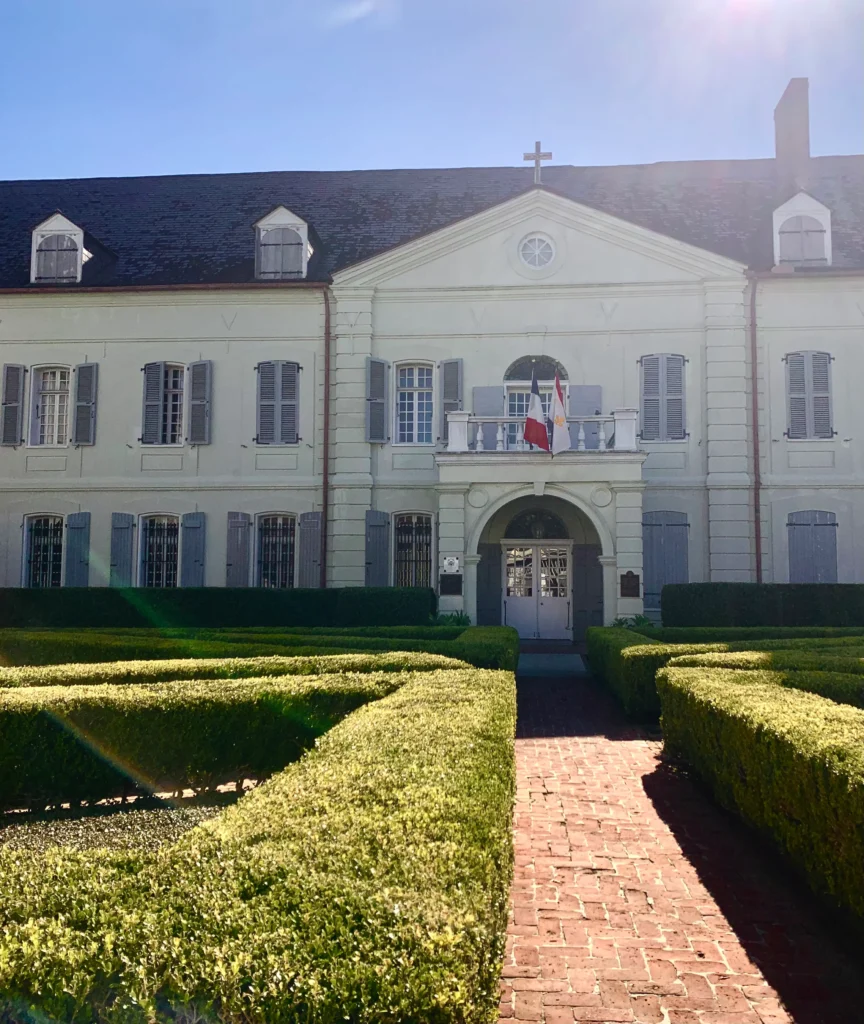
The Old Ursuline Convent, where this legend emerged nearly three centuries ago, is unassuming in appearance, unless you take a closer look. But before we get to the supernatural part of the story, understanding the social climate of the “Casket Girls or Filles à la cassette is vital for context.
The History
In 1727, the Mississippi Valley was French territory and populated by very few, notably even fewer women. At the behest of the Bishop of Quebec, the King of France (Louis XV) began sending young women and girls, ages 12 to 25, to the French colony. It was a move designed to enforce a French Catholic identity, curb interracial procreation, and, frankly, to appease the restless male settlers.
These young women and girls were considered “virtuous” in comparison to the failed experiment years prior, when the previous French King (Louis XIV) sent sex workers to become settlers’ wives. But according to colonial records, these women ‘did not make very good wives.’
The truth, though, was much more devastating: whether women were “virtuous” or not, ironically, the men did not make very good husbands. Their abuse was pervasive, and eventually, the King was forced to send many of the women back to France. The gap between historical truth and rumors of the settlers is exactly what set the stage for the infamy of the “Casket Girls.”
The Casket Girls Self-Guided Tour
-
The Old Ursuline Convent (1100 Chartres St): Stand on the corner of Chartres and Ursulines Ave. Look at the 3rd-floor windows. - The Haunted Hotel (623 Ursulines Ave): Just a block away. It's rumored to be where some of the girls stayed or were "held" before the convent was finished.
- The Pharmacy Museum (514 Chartres St) or The Cabildo (701 Chartres St) to see "cassette" trunks.
The Myth
Pale Girls and Wooden Caskets
Even upon arrival, the girls brought a wave of suspicion onto themselves. After months at sea and arriving in the hot and swampy climate of a developing colony, the girls appeared strikingly pale. They carried small wooden trunks called cassettes to hold their belongings, and to the settlers, pale skin and casket-looking trunks were unnerving.
This, combined with the girls later departure, set the stories alight. When the King eventually gave the orders to return the women to France, the nuns—who had been the girls’ caretakers—moved the cassettes to the third-floor attic of the Convent for storage. Only when they came to retrieve the girls’ belongings, the trunks were empty.
The story suggests that either the girls were vampires or they were merely the mules for the creatures that were now loose in New Orleans and there to stay. The nuns, reportedly afraid of the supernatural possibilities, sealed the attic shut, and to this day the shutters remain closed. In fact, local lore suggests a Pope had blessed the very nails used to seal the shutters.
The Experience
If you partake in one of the many ghost tours offered throughout the city, the Convent will likely be on of your stops. Whether you believe in the supernatural or not, the buzz of being in New Orleans, with jazz music playing in the distance and a tour guide in a top hat, makes the shadows on the Convent walls feel a little darker. Something right out of an Anne Rice novel.
Stories of vampires, Voodoo, and witches are some of the many running themes of the folk narratives in the city—tales born from the convergence of history and superstition, the interwoven cultures of peoples that were taken from their homes, and inevitable passage of time. So, those who love the macabre and history won’t just see New Orleans for Bourbon Street, but for the lore that runs through the city so viscerally. The “Casket Girls” is one such story, and one of many haunting landmarks that everyone visiting should experience.
-Alexis
Myth
- The girls brought “caskets” full of vampires.
- They were pale immortals from France.
- The attic was sealed with blessed nails.
- The trunks were found empty.
Reality
- They brought cassettes (small luggage) full of clothes.
- They were malnourished and sun-deprived from long journey overseas.
- The shutters were sealed to protect paper archives.
- They were poor and left everything they owned.